China’s best-selling car is not a six-figure technological showcase. It is a small, practical electric hatchback priced to compete where European manufacturers can least afford to lose.
For much of the past decade, Chinese carmakers entered Europe by trying to prove that they could build more technology for less money.
The first wave brought large displays, long equipment lists and electric SUVs priced below familiar Western rivals. The cars were often impressive, but they still asked buyers to take a chance on an unfamiliar badge.
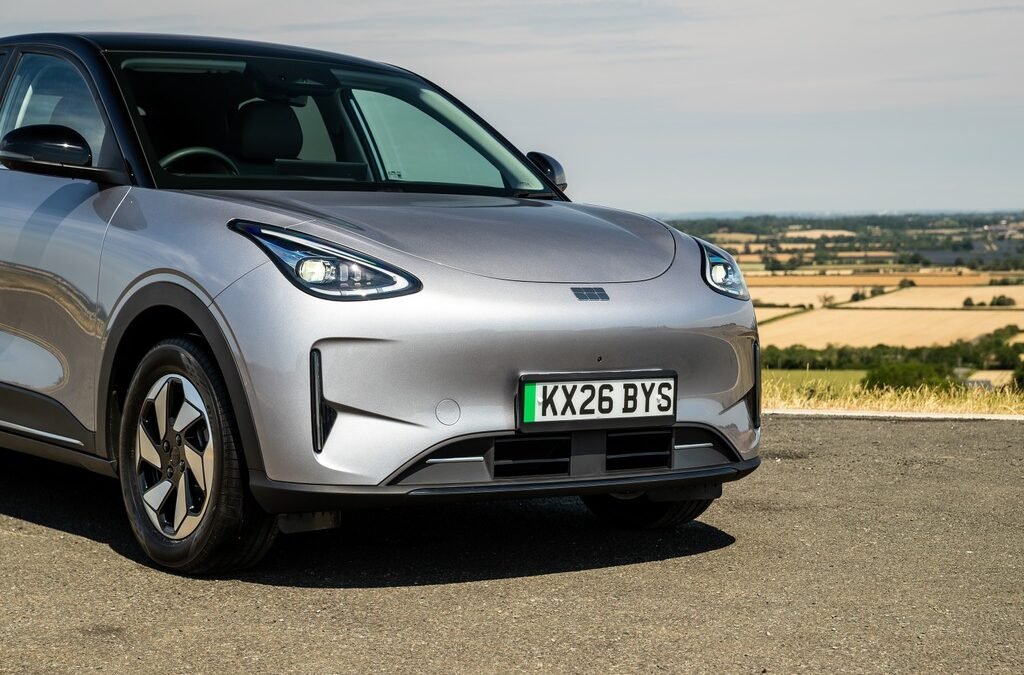
The Geely EX2 takes a more direct approach.
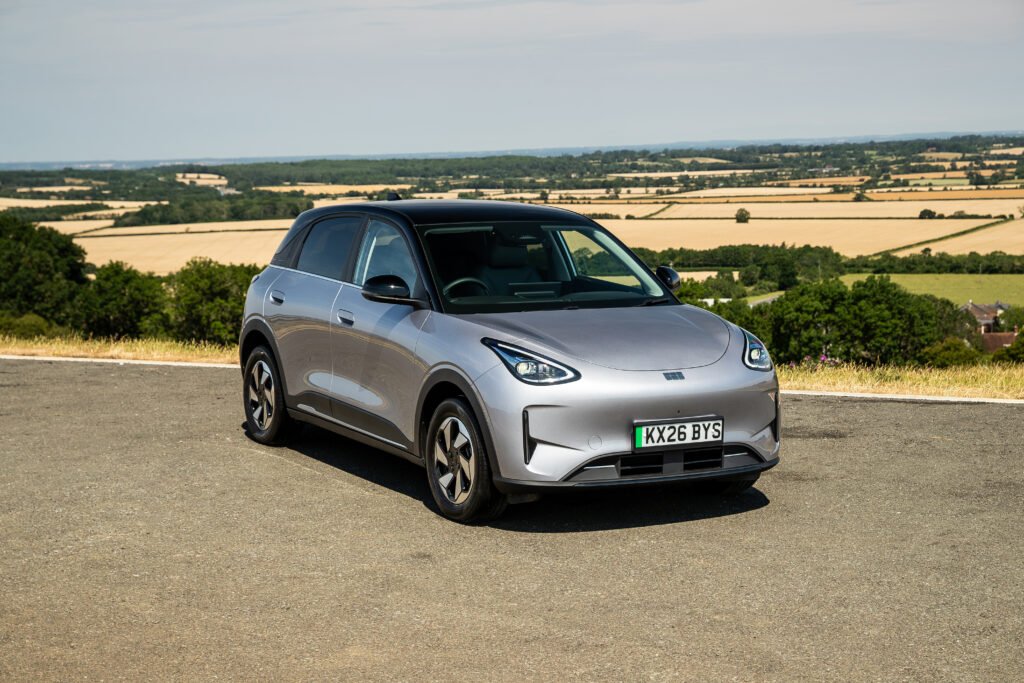
It is small, useful and reportedly heading to British showrooms in August with a starting price below £21,000. Rather than competing with luxury electric cars or attempting to out-accelerate a Tesla, it is entering the part of the market where price, space and everyday convenience matter most. Current British launch reports place the higher Max and Ultra versions at £23,490 and £25,490, although final specifications and pricing should still be treated as provisional until confirmed directly by Geely UK.
That makes the EX2 more significant than its modest dimensions suggest.
The greatest threat Chinese manufacturers pose to established European brands may not be a spectacular flagship. It may be a pleasant-looking hatchback that families can actually afford.
China Has Already Given Its Verdict
The EX2 is known in China as the Geome Xingyuan, where it became the country’s best-selling car in 2025.
That matters because the Chinese market is no longer a place where inexpensive domestic cars succeed simply because international alternatives are unavailable. It is one of the most competitive automotive markets in the world, filled with capable electric models from BYD, Geely, SAIC, Chery, Tesla and dozens of ambitious local brands.
Winning there requires more than a low price.
The EX2’s appeal comes from combining manageable dimensions with an interior that does not feel deliberately stripped of value. It is slightly more than 4.1 metres long, yet offers a 375-litre rear boot and approximately 75 litres of additional storage beneath the bonnet. Reports from early European previews also highlight a flat rear floor and noticeably useful passenger space.
These are not glamorous advantages. They are the sort of advantages buyers notice every day.
Affordable Does Not Have to Mean Punishing
Cheap electric cars often reveal where their manufacturers saved money within minutes.
The plastics are hard. The seats are basic. The software is slow. Useful controls disappear into a touchscreen because fitting physical switches costs more.
The EX2 does not escape every budget-car compromise, but it appears to have been designed by people who understand that affordable transportation should not feel like a penalty.
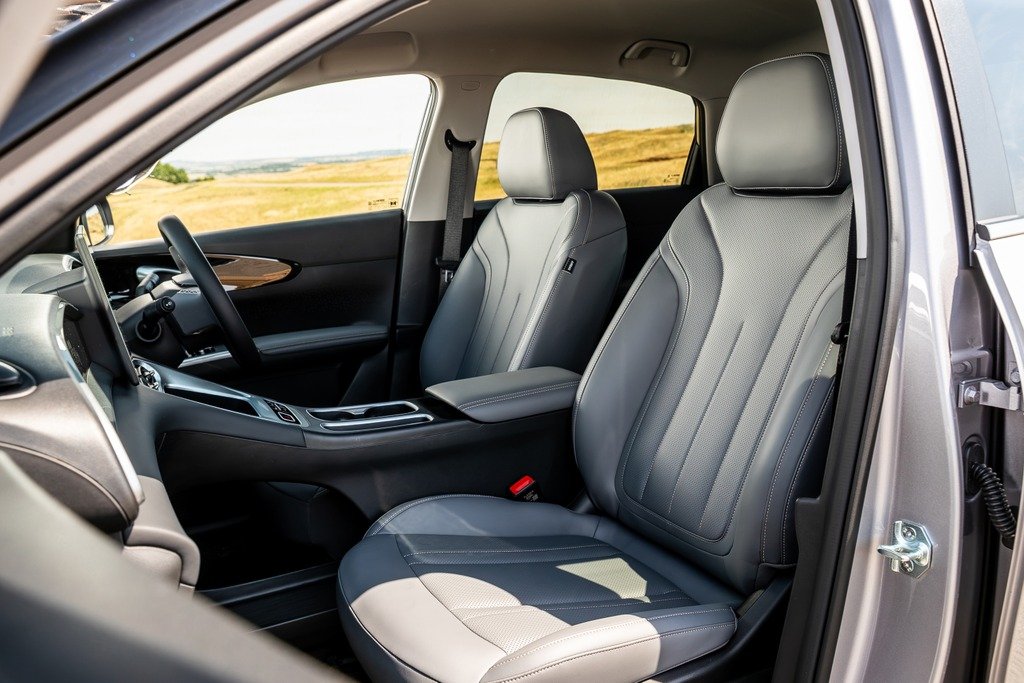
A 14.6-inch central touchscreen dominates the dashboard, accompanied by an 8.8-inch driver display. More importantly, Geely has retained physical controls on the steering wheel and centre console for commonly used functions.
That balance is important.
A large screen looks modern in a photograph. A real button becomes valuable on the first dark, wet journey when the driver wants to adjust something without searching through a menu.
The EX2 also uses a rear-mounted electric motor and rear-wheel drive in its home-market configuration. That does not transform it into a sports car, but it allows the front wheels to concentrate on steering and contributes to the packaging that creates its unusually useful cabin.
The Price Is the Technology
European electric cars have improved enormously, but affordability remains one of the industry’s unresolved problems.
A Renault 5, Citroën ë-C3 or forthcoming Volkswagen ID. Polo may offer attractive design and a reassuringly familiar badge. They also have to support European factories, labour costs, dealer networks and increasingly expensive development programmes.
Geely arrives with enormous scale behind it.
The wider group owns or controls brands including Volvo, Polestar, Lotus, Zeekr and Lynk & Co. It has access to battery technology, software development, shared vehicle architectures and a domestic market capable of generating volumes that most European manufacturers cannot match.
The EX2 is the product of that industrial machine, condensed into a relatively ordinary-looking small car.
Its most disruptive feature is therefore not the touchscreen, electric motor or storage space.
It is the possibility that Geely can offer all of them at a price close to that of a conventional petrol hatchback.
Britain Is More Than Another Export Market
Geely’s ambitions in Britain extend well beyond a single model.
The company is targeting 100,000 annual UK sales and plans to build a portfolio of approximately 10 electric and plug-in hybrid vehicles by 2029. Britain is particularly attractive because it does not apply the same additional tariffs on Chinese-built electric vehicles introduced by the European Union.
The EX2 is therefore not arriving as an isolated experiment.
It is an entry point.
A reasonably priced small car can introduce the brand to customers who may later consider a larger Geely, a premium Zeekr or another model connected to the group. That is the same ladder established manufacturers have used for generations: win a buyer early, then keep that buyer as their needs and budget grow.
The difference is that Geely is beginning with an electric car at a time when many European brands are still struggling to make small EVs profitable.
The Real Competition Is Normality
Chinese cars were once easy to dismiss because they looked unusual, felt unfinished or arrived under badges few buyers recognised.
The EX2 represents a more difficult kind of competition.
It looks friendly rather than aggressive. Its performance is unlikely to dominate social media. Its interior appears modern without resembling a technology demonstration. It carries shopping, passengers and charging cables without demanding a premium-car budget.
In other words, it appears normal.
That may be its greatest strength.
The EX2 does not need to persuade every British buyer that Geely is more desirable than Renault, Volkswagen or Citroën. It only needs to convince enough people that the badge matters less than the monthly payment and the usefulness of the car attached to it.
Europe’s Small-Car Advantage Is No Longer Guaranteed
European manufacturers have traditionally understood small cars better than almost anyone.
Models such as the Renault 5, Fiat Panda, Volkswagen Polo and Citroën C3 were created for narrow streets, expensive fuel and buyers who expected one compact vehicle to handle most parts of life.
The transition to electric power has placed that expertise under pressure. Batteries remain costly, safety requirements add weight and manufacturers often find it easier to earn money from larger SUVs.
Geely has identified the opening.
The EX2 is not revolutionary in the traditional sense. It does not introduce a new body style or a breakthrough battery. Its challenge is more practical: it aims to make an electric car feel financially ordinary.
Should its reported British pricing survive the journey from announcement to showroom, the EX2 will force European brands to answer an uncomfortable question.
If China can build the small, affordable cars Europe once specialised in, what advantage does the home team have left?