The seven-seat Škoda Peaq promises more than 640 kilometres of range, an enormous cabin and the most ambitious interior the Czech brand has attempted. Its real challenge is keeping the honesty and usefulness that made Škoda so easy to like.
Source and market context: The range, charging and luggage figures below come from Škoda’s launch materials. The longest claimed range and the largest boot do not describe every version: battery choice and seating configuration matter. Real-world range, a fully loaded third row and charging in cold weather require independent testing. Škoda’s 23 June 2026 Peaq press kit (PDF).
We have a soft spot for Škoda.
That is worth admitting at the beginning, because the brand has earned it. For years, its best cars have offered more space, more thought and fewer unnecessary complications than their price or position in the market might suggest.
The Octavia often feels like a larger car than it is. The Superb turned rear legroom into a genuine selling point. The Kodiaq gave families seven seats without becoming oversized or intimidating.
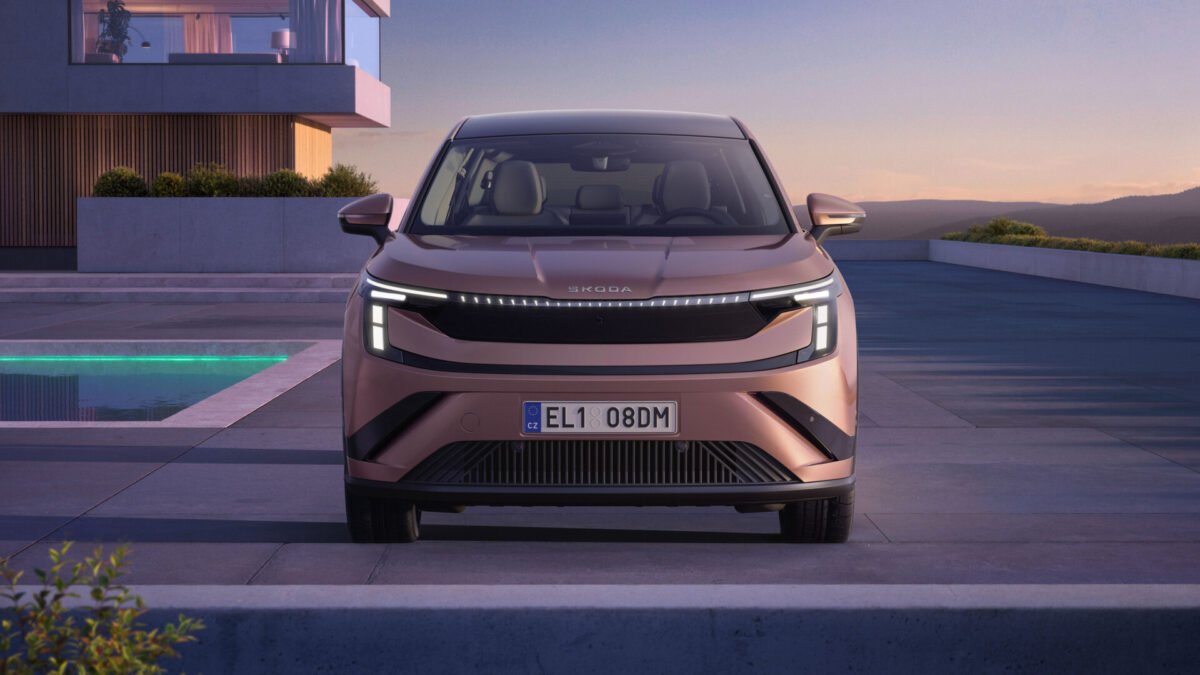
Now comes the Škoda Peaq, the largest and most ambitious vehicle the company has produced.
At 4.87 metres long, with a wheelbase approaching three metres, it is considerably larger than the Kodiaq. It offers up to seven seats, a claimed range of more than 640 kilometres and towing capacity of up to 2,000 kilograms.
It is also Škoda’s new flagship.
That title changes the expectations. The Peaq must feel more refined and technologically advanced than anything below it, yet it cannot afford to lose the practical intelligence that defines the brand.
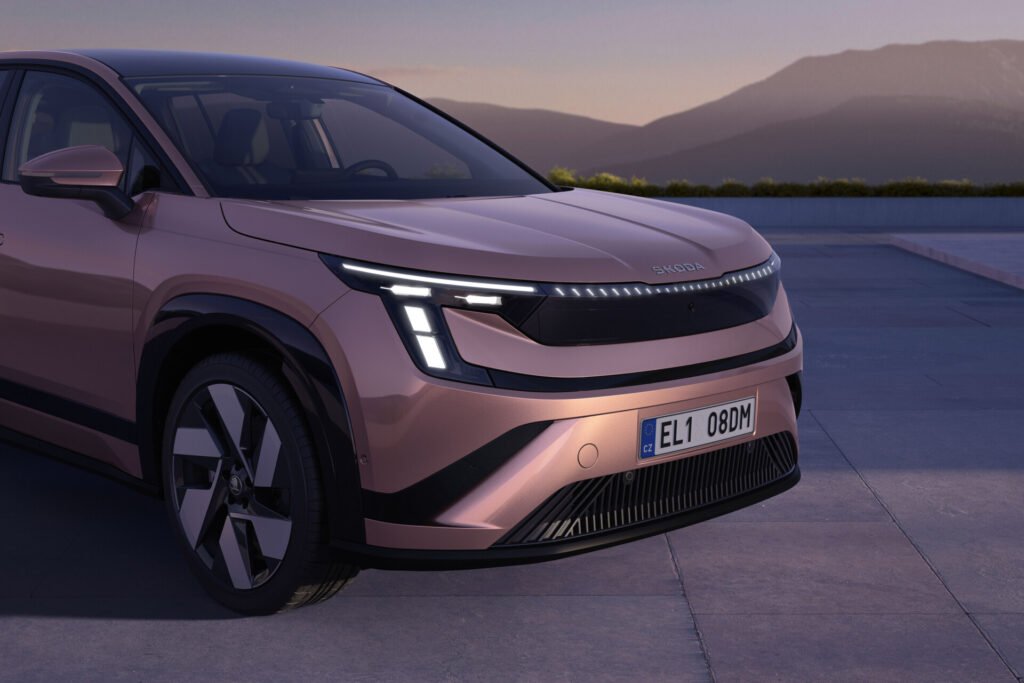
Why the Škoda Peaq Is More Than an Electric Kodiaq
The obvious comparison is the Kodiaq, but the Peaq is not simply an electric version of Škoda’s familiar family SUV.
It is 116 millimetres longer, and the 2,965mm wheelbase adds 174mm between the axles. The proportions are designed around passenger space rather than a large bonnet or exaggerated SUV styling.
In its five-seat configuration, the Peaq provides a 935-litre luggage compartment, the largest boot in the current Škoda range. A 37-litre storage area beneath the bonnet gives charging cables their own space, while more than 33 litres of smaller storage is distributed around the cabin.
With the optional third row raised, boot capacity falls to 299 litres. Fold those seats away and the figure increases to 890 litres.
That is a useful reminder of how seven-seat SUVs work in the real world. The Peaq can carry seven people, or it can carry a great deal of luggage. Doing both at once requires restraint.
The third row is optional rather than standard, so buyers who rarely need more than five seats can keep the larger luggage area without carrying unused seats around every day.
The decision feels very Škoda: give the customer flexibility rather than force every version into the same configuration.
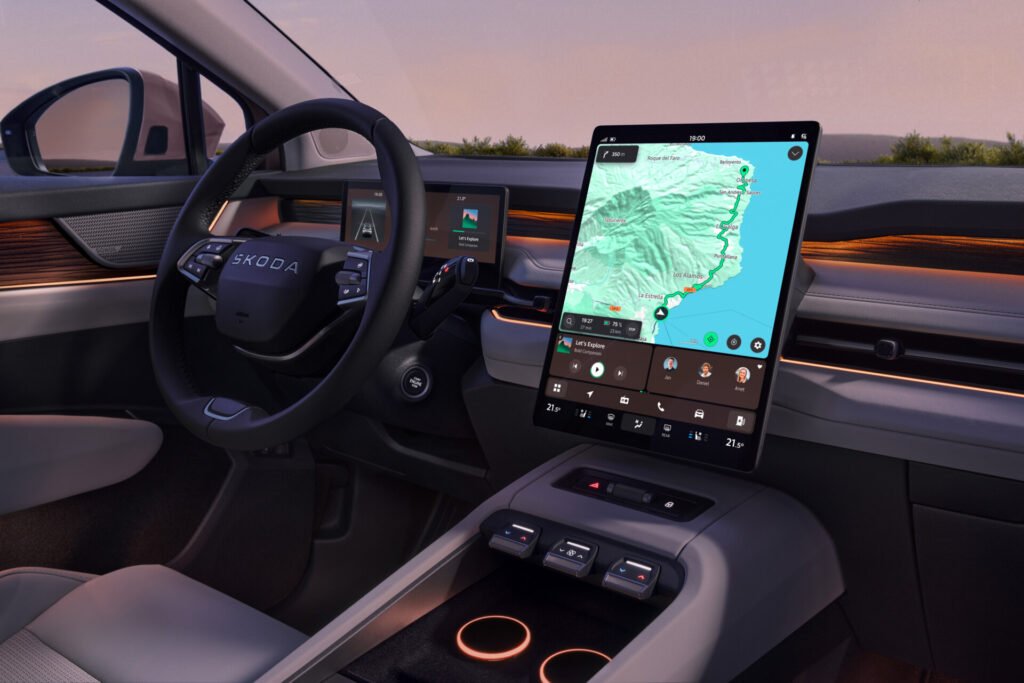
The Škoda Peaq Interior Takes Luxury in a Practical Direction
The Peaq introduces features that would have seemed unusual in a Škoda only a few years ago.
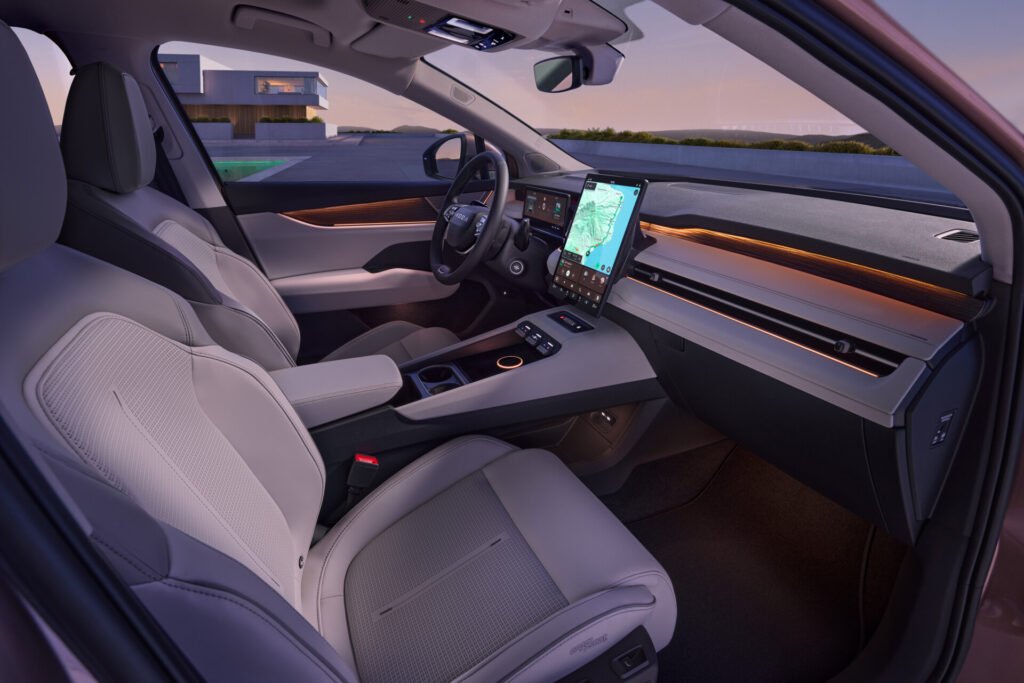
The optional Relax Package includes electrically adjustable front seats with heating, ventilation, massage functions and extendable leg rests. Small cushions attach to the head restraints, and a folding table is stored inside the centre console.
A dedicated wellbeing application can coordinate the seats, climate control and ambient lighting through several relaxation and stretching programmes.
There is also an available 16-speaker, 755-watt Sonos audio system, the first Sonos installation offered in a production Škoda.
On paper, this risks sounding like a mainstream manufacturer trying too hard to imitate a luxury brand.
The details make the idea more convincing.
The folding table, flexible seating and carefully planned storage are not there merely to impress someone during a showroom visit. They are features a family might use on a long journey, while charging or during a roadside stop.
Škoda’s interpretation of luxury appears to be rooted in reduced effort rather than exclusivity. The Peaq is not trying to become a limousine. It is trying to make a large family car more comfortable and easier to live with.
That approach suits the badge far better than oversized decorative trim or artificial sportiness would have done.
Škoda Peaq Range and Powertrain Options
The range begins with the rear-wheel-drive Peaq 60.
It uses a 63kWh gross battery, with 59kWh available to the driver, and a 150kW motor producing 350Nm of torque. Škoda claims more than 450 kilometres of WLTP range, acceleration from 0–100 km/h in 8.4 seconds and a top speed of 160 km/h.
The Peaq 90 receives a much larger 91kWh battery, of which 86kWh is usable. Its rear-mounted motor produces 210kW and 545Nm, reducing the 0–100 km/h time to 7.1 seconds.
Its claimed range exceeds 640 kilometres.
The Peaq 90x adds a second motor at the front axle, creating all-wheel drive and raising total output to 220kW. It reaches 100 km/h in 6.7 seconds and offers more than 610 kilometres of claimed range.
The all-wheel-drive model can tow up to 2,000kg, compared with 1,800kg for the rear-wheel-drive versions.
None of these models is designed around extreme acceleration.
That is a sensible choice. A large family SUV benefits more from predictable power delivery, long range and confidence in poor weather than from an acceleration figure created primarily for social media.
The rear-wheel-drive Peaq 90 may be the strongest all-rounder. It offers the longest claimed range, substantial torque and less mechanical complexity than the dual-motor version.
Charging Is Competitive Rather Than Exceptional
The Peaq 60 can charge from 10 to 80 percent in a claimed 27 minutes.
The larger-battery versions require 28 minutes, with DC charging power reaching 199kW.
Those figures are perfectly respectable, although several rivals built around 800-volt electrical systems can complete a similar charging session more quickly.
The Hyundai Ioniq 9, for example, claims approximately 24 minutes under ideal conditions.
A difference of four minutes is unlikely to define ownership. Charger reliability, battery temperature and the ability to sustain a high charging rate often matter more than the advertised peak.
The Peaq’s stronger argument is the combination of a long claimed range and a charging stop that remains comfortably below half an hour.
Independent testing will still be essential. A large electric SUV carrying passengers and luggage at motorway speeds may deliver a very different result from an official laboratory cycle, particularly in winter.
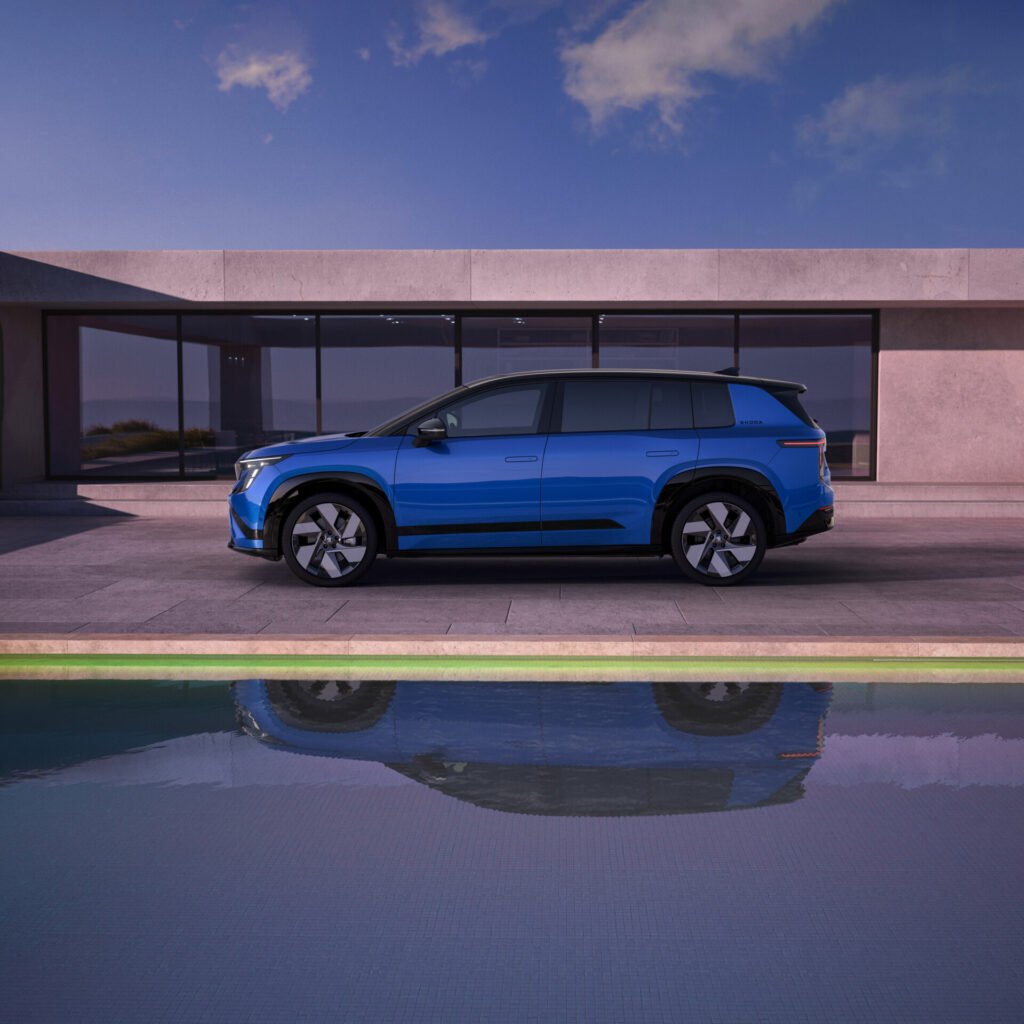
The Design Looks Confident Without Trying to Intimidate
The Peaq follows Škoda’s Modern Solid design language.
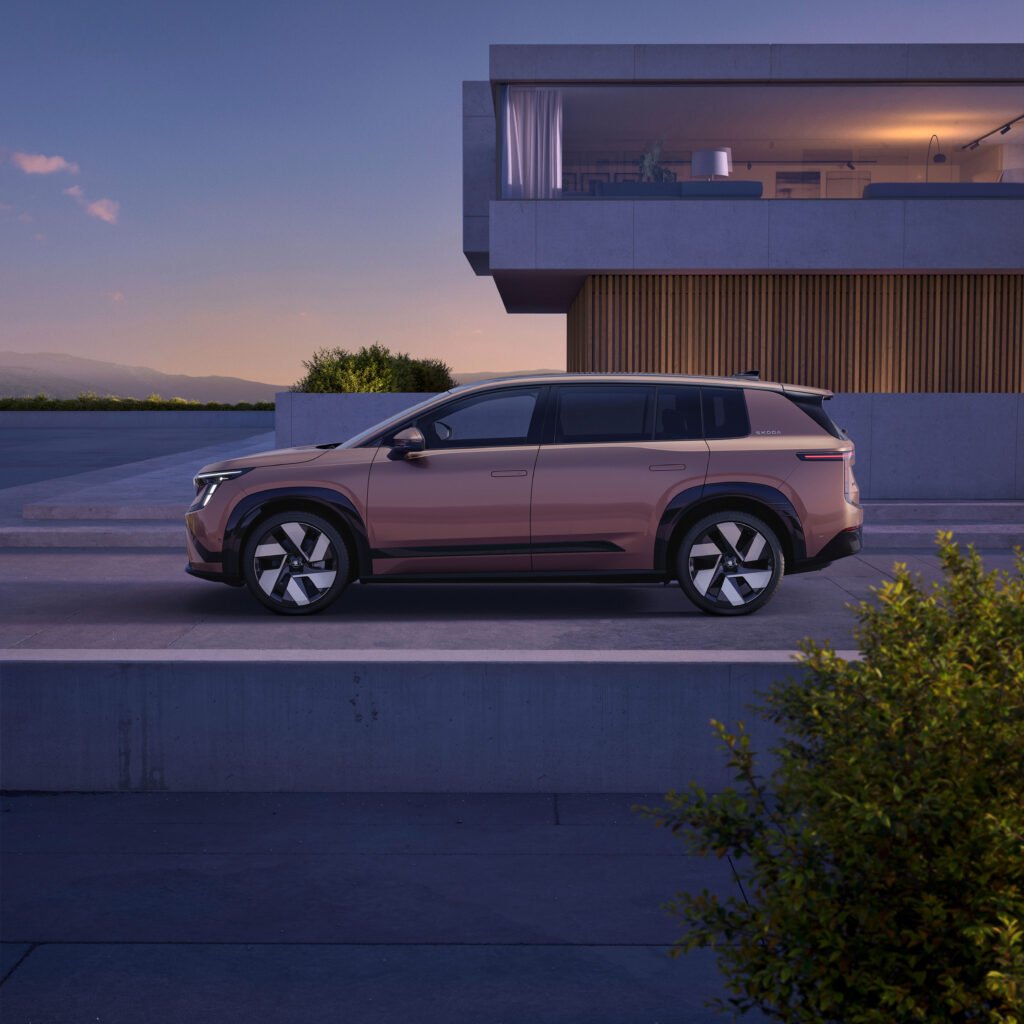
Its front end combines narrow T-shaped lights with the glossy Tech-Deck Face, while the body uses cleaner surfaces than the Kodiaq. Flush door handles appear on a Škoda production model for the first time.
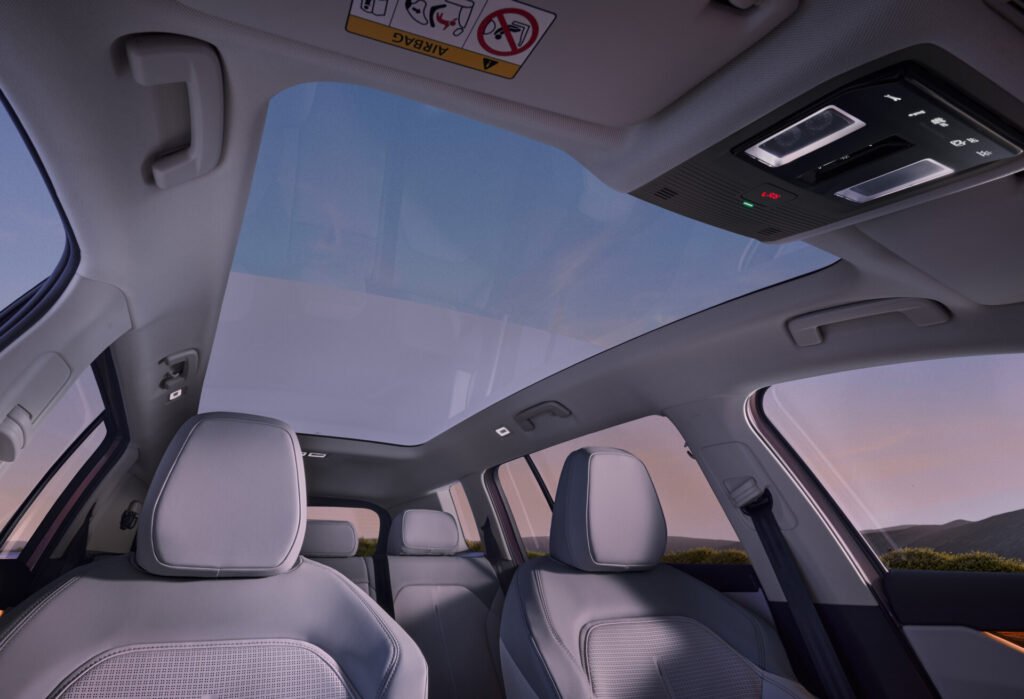
An optional electrochromic panoramic roof covers more than 2.1 square metres. It is divided into nine independently adjustable sections, allowing occupants to control the amount of light entering different parts of the cabin without using a conventional blind.
Despite its dimensions, the Peaq achieves a drag coefficient as low as 0.249. Active cooling shutters, air curtains, a smooth underbody and aerodynamic wheels all contribute.
The styling is restrained for a modern flagship SUV.
There is no enormous imitation grille and no attempt to make a seven-seat family car look needlessly aggressive. Its presence comes from its length, upright cabin and long wheelbase.
That restraint works in Škoda’s favour. The Peaq does not need to resemble a discounted premium SUV. It needs to look like the most complete version of a Škoda.
Škoda Has Kept the Controls Drivers Actually Use
The dashboard is dominated by a vertically mounted 13.6-inch central display running an Android-based system. It is the first portrait-format screen fitted to a production Škoda.
Large touchscreens are now expected, but they often make basic tasks harder than they need to be.
Škoda has retained physical buttons for the hazard lights, locking and audio volume. Three tactile switches control the driver’s temperature, passenger temperature and fan speed.
This may be one of the most encouraging details in the entire cabin.
Drivers should not have to search through a screen to change the temperature. Earlier Volkswagen Group interiors were criticised for removing too many physical controls in the pursuit of visual simplicity.
The Peaq remains heavily dependent on software, but Škoda appears to understand that a clean dashboard has little value when the car becomes frustrating to operate.
The Battery Can Be Useful While the Car Is Parked
Every Peaq supports bidirectional charging.
Vehicle-to-Load allows the car to power external equipment such as tools, camping appliances or electric bicycles. Vehicle-to-Home and Vehicle-to-Grid systems can potentially return electricity to a compatible home or energy network.
Actual availability will depend on local regulations, charging hardware and electricity providers. It should not be treated as a feature every owner can activate immediately.
The capability still makes sense in a vehicle carrying such a large battery.
Most cars spend most of their lives parked. Bidirectional charging could allow the Peaq to become part of a household energy system rather than leaving that capacity unused.
The Peaq also supports one-pedal driving, allowing regenerative braking to bring the vehicle to a complete stop. That should be useful in urban traffic, provided the calibration is progressive and easy to judge.
The Škoda Peaq Arrives at the Right Time
Škoda is not launching its flagship from a position of weakness.
The Enyaq and Elroq have already established the brand as a serious participant in the European EV market. Buyers are familiar with the idea of an electric Škoda, and the company has a large customer base that trusts its approach to family cars.
The Peaq does not need to invent that reputation.
Its job is to stretch it.
That may be why the vehicle already feels more convincing than many attempts by mainstream manufacturers to move upward. Škoda has not discarded the qualities people already value. It has applied them to a larger cabin, a longer range and a more ambitious interior.
The danger is not that the Peaq lacks technology.
It is that the technology could obscure what Škoda does best. Massage programmes, premium audio and a panoramic roof should support the car rather than become its entire personality.
The Biggest Škoda Still Needs to Feel Honest
The Peaq appears to have the foundations of an excellent family SUV.
It offers serious cabin space, useful towing capacity, competitive charging and enough claimed range to make long-distance electric travel realistic. The design avoids unnecessary aggression, and the cabin retains several of the controls drivers use most often.
There are still unanswered questions.
The third row needs to be tested with adults. Real-world range may fall well below the official figure in difficult conditions. Ride comfort, software quality and the behaviour of a fully loaded vehicle cannot be judged from specifications.
Still, the Peaq shows why Škoda remains one of the easiest car brands to support.
It has not tried to create a flagship simply by adding more performance, more screens and more decoration. The emphasis remains on space, storage, comfort and the small decisions that make ownership easier.
The Škoda Peaq is bigger and more ambitious than anything the brand has built before.
The best outcome would be for it to feel completely normal – not because it lacks ambition, but because Škoda has made that ambition useful.
Related reading
For the opposite approach to family-car packaging, see our Honda N-BOX analysis. A much smaller footprint changes the compromises, but ease of access and useful storage remain central.