Some cars make you dream about crossing a continent. The Mazda MX-5 makes a persuasive case for going out for coffee and taking the scenic route home.
Imagine a Saturday morning with nothing especially urgent on the calendar. There is a café you like, a road you usually avoid because it takes longer, and enough time to put the two together. No epic itinerary. No luggage strategy. Just a reason to leave the house.
That is a useful way to think about the MX-5. Its appeal is easy to lose in a discussion of horsepower, lap times and which generation deserves the loudest applause. The more interesting question is what kind of day a small sports car encourages you to have.
A remarkably focused invitation
Mazda unveiled the original MX-5 at the Chicago Auto Show in February 1989. The company describes the guiding idea as Jinba Ittai: rider and horse moving as one. Beneath the poetic language is a straightforward ambition for the relationship between a driver and a machine.
A car can be impressive while asking very little of its driver. The MX-5’s enduring proposition is participation: the route, the controls and the surroundings are part of the reason to go. You do not need to turn every journey into an event, but you can choose to notice it.
There is something appealing about a car with such a legible purpose. It does not have to satisfy every possible version of your life. It can be the answer to one modest question: would you like to enjoy this particular drive?
The interesting number is sometimes the weight
When Mazda introduced the fourth-generation Roadster in Japan in 2015, it reported a reduction of more than 100 kilograms and a weight of 990 kilograms for the Japanese S grade. That is a historical specification for that version, not a claim about every MX-5 sold today.
The figure is interesting because it records a deliberate act of subtraction. Designing a sports car also means deciding what it should carry, how much space it should occupy and which compromises are acceptable. A compact roadster makes those decisions unusually visible.
Of course, the romance has limits. Two seats remain two seats. A small cabin does not become a family room because the sun comes out. Weather, luggage and the person sharing the journey still get a vote. The attraction lies in accepting the brief, not pretending the compromises disappear.
Leave the stopwatch at home
For a weekend drive, a good route can be one with somewhere pleasant to stop. A view, a bakery, a village you normally pass on the main road. The destination gives the journey a shape without turning it into a schedule.
There is no need to invent a personal best. A relaxed pace leaves room to enjoy the scenery and the company. The coffee may be the same coffee you could have bought nearby; the morning is different because you made a little space around it.
That feeling is not exclusive to a Mazda, or even to a sports car. Our collection of German cars that make a drive feel special approaches the subject from other directions. Comfort, character and a sense of occasion can each make an ordinary trip memorable.
A small reason to go somewhere
The MX-5 offers a particularly clear version of the idea. There is room for a driver, a companion and a plan that does not need to be very ambitious.
Perhaps that is enough for a Saturday. Find somewhere worth stopping, leave time to get there, and let the drive occupy more of the morning than the map says it should.
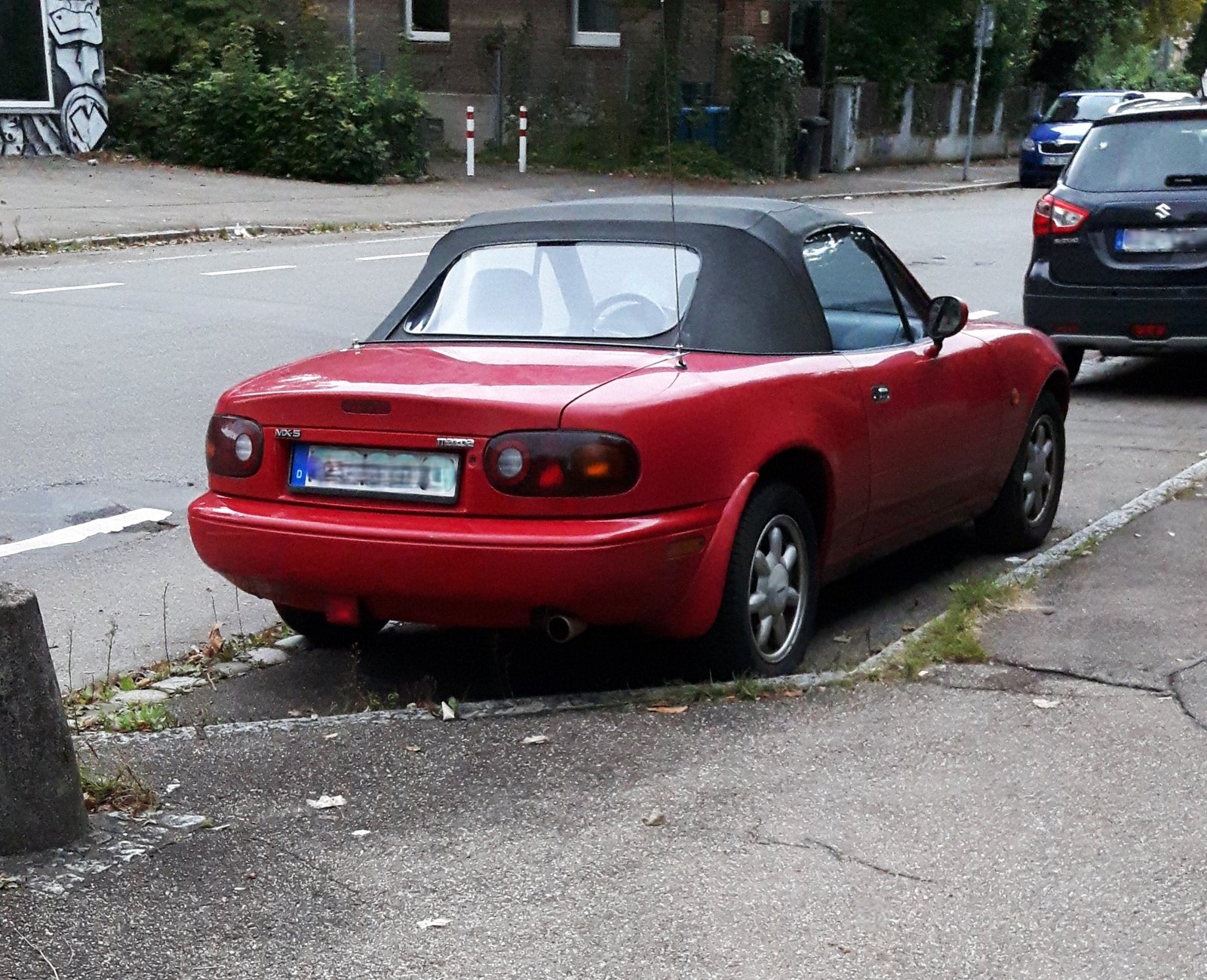
Weekend essay, not a first-hand road test or buying guide. Historical references: Mazda’s MX-5 anniversary history and 2015 Japanese Roadster announcement. Photographs are archival and show different generations and body styles.
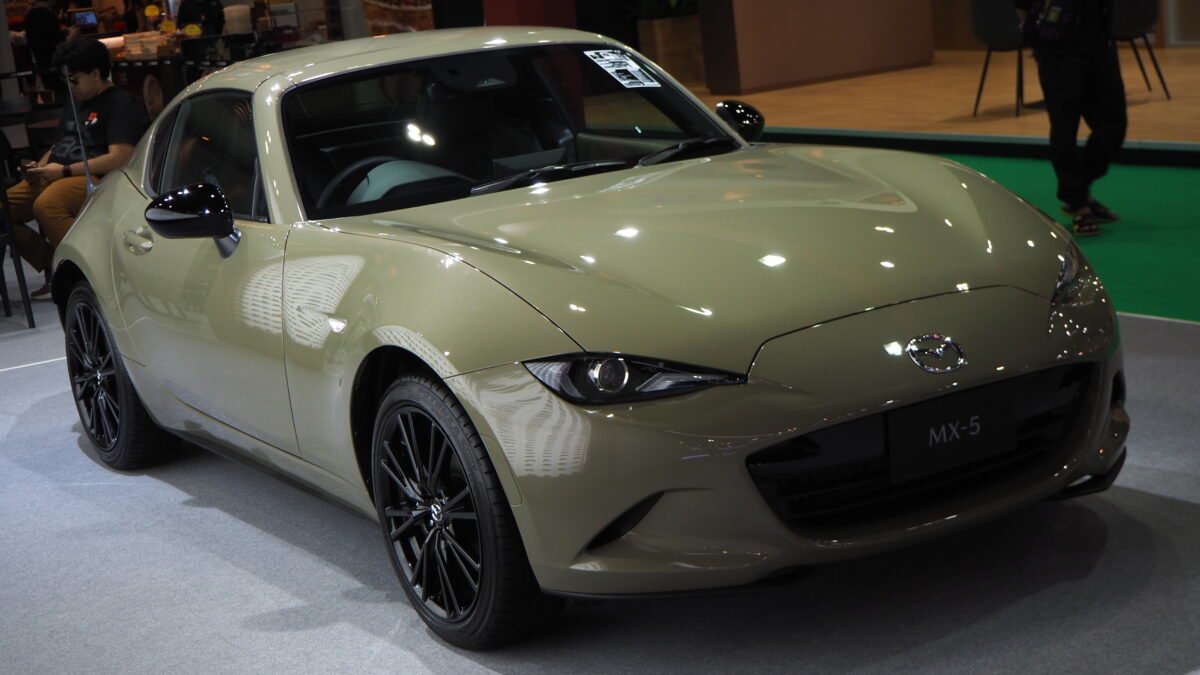
Featured image: 2024 Mazda MX-5 RF photographed in Thailand on March 29, 2024. Archive photo: Chanokchon / Wikimedia Commons, CC BY-SA 4.0. No editorial alterations; display copies may be resized.