The most powerful Sixpack-powered Charger yet will be revealed in August. Its real mission is proving that American muscle can survive without depending entirely on a V8.
Dodge is preparing another version of the Charger, and the headline practically writes itself.
More power.
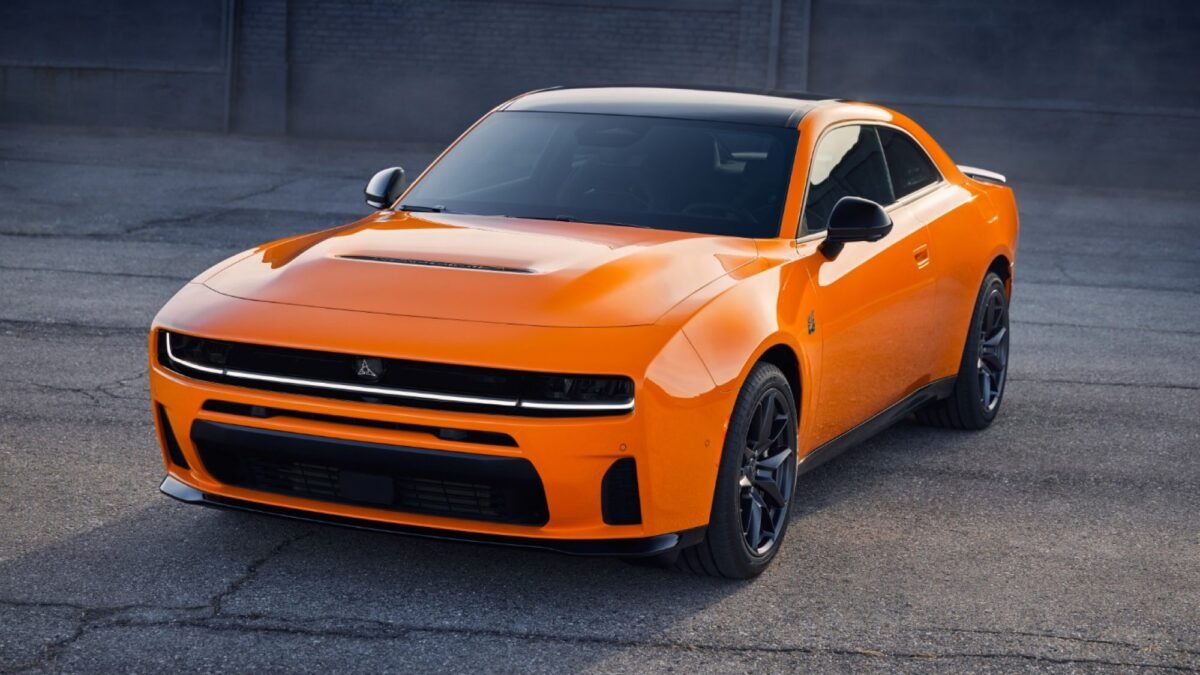
The company will reveal what it describes as the most powerful Sixpack-powered Charger yet during Roadkill Nights at the M1 Concourse in Pontiac, Michigan, on August 8. Dodge has not announced the output, pricing or whether the car will become a regular production model.
That uncertainty will encourage speculation about horsepower.
It may also distract from the more important question.
Can Dodge persuade its most loyal customers that a turbocharged inline-six belongs in a car whose identity was built around the sound, theatre and mythology of a V8?
The new Charger does not merely need to be fast.
It needs to feel legitimate.
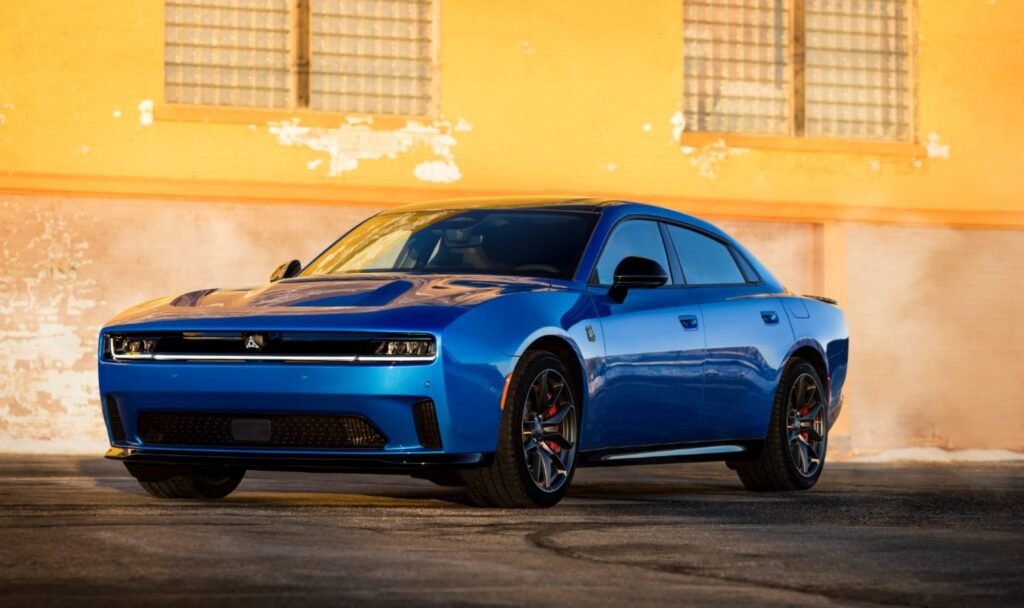
The Existing Sixpack Is Already Serious
The current Charger Scat Pack’s 3.0-litre twin-turbocharged straight-six produces 550 horsepower and 531 lb-ft of torque. Dodge claims it can reach 60 mph in 3.9 seconds and complete the quarter-mile in 12.2 seconds.
The entry-level R/T uses a lower-output version of the same engine with 420 horsepower and 468 lb-ft. Both are equipped with all-wheel drive that can disconnect the front axle and send power exclusively to the rear wheels.
Those are not apologetic figures.
The Scat Pack already makes more power than many previous-generation V8 Chargers. Its twin 54mm Garrett turbochargers produce up to 30 psi of boost, while forged pistons and strengthened internal components allow the engine to operate at a level far beyond an ordinary six-cylinder family car.
Measured objectively, the Sixpack is capable of doing the job.
Muscle cars, however, have never been judged objectively.
A Muscle Car Is More Than an Acceleration Test
Dodge spent years teaching customers that excess was the product.
Hellcat models arrived with supercharged V8 engines, enormous power figures, cartoonish badges and enough noise to make subtlety seem like a manufacturing defect. The brand did not merely sell performance. It sold rebellion.
Replacing that formula was always going to be difficult.
The new Charger arrived first as the electric Daytona, producing as much as 670 horsepower and reaching 60 mph in a claimed 3.3 seconds. By every conventional performance measure, it is exceptionally quick.
Yet speed was only one part of the old Charger’s appeal.
A supercharged V8 shakes the car at idle. It announces every throttle input. It makes routine journeys feel mildly antisocial. Those qualities do not appear on a specification sheet, but they shaped the emotional contract between Dodge and its customers.
The Sixpack must create a new contract.
Dodge Knows the Theatre Still Matters
The gasoline Charger has not been designed as a discreet grand tourer.
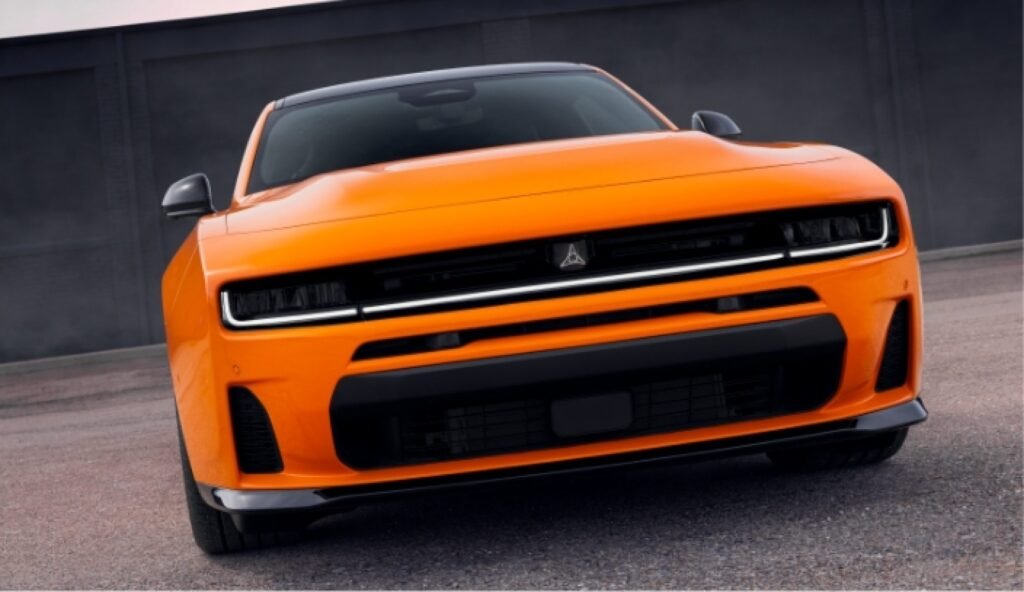
It retains the widebody proportions of the new generation, adds a prominent performance hood and finishes the rear with visible dual exhaust outlets. Inside, Dodge uses a pistol-grip shifter, configurable displays and performance controls intended to make the driver feel that the car is an event rather than an appliance.
The rear-wheel-drive mode is equally revealing.
Standard all-wheel drive makes the Charger quicker and more usable in poor conditions. Allowing the driver to disconnect the front axle makes it possible to behave like a traditional muscle car when conditions permit.
Dodge even promotes the feature in the language of burnouts.
That is not an engineering necessity. It is brand maintenance.
The company understands that its customers do not simply want traction. They want the ability to waste traction deliberately.
More Horsepower Will Not Solve Everything
The August reveal will almost certainly focus on the new model’s output.
Road & Track expects the engine to cross the 600-horsepower mark, but Dodge has not confirmed that figure. The publication also believes the car is unlikely to exceed the electric Daytona Scat Pack’s 670 horsepower.
Wherever the final number lands, the new Charger cannot win by horsepower alone.
Modern electric cars have made straight-line acceleration relatively easy to obtain. A family EV can now produce the kind of launch performance that once belonged exclusively to exotic machinery.
Combustion performance cars need to offer something different.
They need sound, response, character and a sense of mechanical occasion. A turbocharged inline-six will never reproduce the exact experience of a supercharged Hemi, and Dodge should not pretend otherwise.
The opportunity is to make the Sixpack exciting on its own terms.
The Straight-Six Has Its Own History
A straight-six is not an inherently unromantic engine.
BMW built much of its performance reputation around the layout. Toyota’s 2JZ became one of the most celebrated tuning engines of the modern era. The original Nissan Skyline GT-R and more recent high-performance models demonstrated how effectively six cylinders and turbocharging can combine smoothness with enormous power.
The challenge for Dodge is cultural rather than mechanical.
Its audience does not associate the Charger with European sports sedans or Japanese tuning legends. It associates the name with big-displacement American engines.
That means the company needs to give the Sixpack its own personality rather than presenting it merely as the engine that replaced the V8.
The new high-output model is an opportunity to do exactly that.
This Reveal Is Really About Trust
Dodge is asking its customers to accept several changes at once.
The Charger now offers electric power. The gasoline versions use six cylinders. All-wheel drive is standard. The same fundamental body can be ordered with two or four doors.
Each decision is rational. Together, they create a car that is dramatically different from the one enthusiasts remember.
That does not automatically make it worse.
It does mean Dodge has to earn trust rather than relying on the Charger badge to provide it.
The most powerful Sixpack model can help if it feels like the product of genuine enthusiasm rather than a marketing response to criticism. It needs more than a large number on a presentation slide. It needs a distinctive sound, sharp response and the sense that Dodge’s engineers enjoyed developing it.
American Muscle Has Changed Before
The muscle car has never been a fixed technical formula.
Engines changed. Performance declined during the emissions era and returned through fuel injection, supercharging and modern electronics. Automatic transmissions became quicker than manuals. Independent suspension replaced older layouts. Safety and refinement improved.
The category survived because the emotional idea remained intact.
A muscle car should feel excessive, accessible and slightly unreasonable.
The next Charger does not need eight cylinders to satisfy that definition. It does need enough character to make drivers stop counting them.
When Dodge unveils the new Sixpack in August, the horsepower figure will dominate the news.
The more important result will be whether anyone still misses the V8 after hearing it run.