The fifth-generation X5 arrives with gasoline, plug-in hybrid and fully electric power. Hydrogen is also coming. BMW’s biggest idea is not a single new technology, but giving buyers permission to choose.
The car industry has spent years trying to predict the exact moment when one kind of powertrain will replace another.
BMW has chosen a different strategy for the 2027 X5.
The fifth generation of the company’s best-known SUV will launch with an updated gasoline engine, a plug-in hybrid and, for the first time, a fully electric iX5. A V8-powered performance model will follow later, while BMW is also preparing a production hydrogen fuel-cell version for a later stage.
All of them will wear essentially the same body.
It is an unusually broad approach at a time when manufacturers are dividing their ranges into separate electric and combustion families. Instead of asking customers to accept one vision of the future, BMW is building several versions of it into the same vehicle.
That may sound indecisive.
It may also be one of the most realistic product decisions the company has made.
The BMW X5 Has Changed the Market Before
When the original BMW X5 arrived in 1999, a large luxury SUV with the road manners and performance ambitions of a BMW still felt unusual.
The X5 helped establish the template that now defines much of the premium market: an SUV tall enough to appear adventurous, comfortable enough for long journeys and engineered to drive more like a large sedan than a traditional off-roader.
The formula proved enormously successful. BMW expanded the X family in almost every direction, while Mercedes-Benz, Porsche, Audi, Volvo and eventually nearly every premium manufacturer developed competing models.
The 2027 BMW X5 enters a very different market.
Customers now have more SUV choices than they can reasonably compare, while the industry is divided over how quickly electric vehicles will become dominant. Charging infrastructure, government policy, taxation and buyer demand vary dramatically between regions.
BMW’s answer is not to simplify.
It is to make the X5 adaptable enough to survive whichever direction each market takes.
Globally, BMW says the new generation will eventually support five types of drive system, depending on the country: gasoline, diesel, plug-in hybrid, battery-electric and hydrogen fuel-cell power.
Gasoline Is Not Being Treated Like a Leftover
The entry point to the American range will be the BMW X5 40 and all-wheel-drive X5 40 xDrive.
Both use an updated version of BMW’s 3.0-liter turbocharged inline-six, combined with a 48-volt mild-hybrid system. A new turbocharger helps raise output to 394 horsepower and 428 lb-ft of torque, an increase of 19 horsepower over the previous version.
BMW estimates that the X5 40 will reach 60 mph in 5.1 seconds, or 4.8 seconds using the rollout measurement commonly applied to American acceleration testing.
The mild-hybrid motor is integrated into the eight-speed transmission and can provide up to 17 horsepower of temporary assistance. It also smooths engine restarts and recovers energy during deceleration.
Those details matter because BMW is not presenting the gasoline X5 as an outdated version for buyers who have not yet accepted the future.
It remains a fully developed product with more power, revised combustion technology and its own chassis calibration.
That is an important distinction.
Some manufacturers make their combustion models feel increasingly temporary, while directing the most interesting design and technology toward electric vehicles. BMW is attempting to keep both groups of customers inside the same premium experience.
The Plug-In Hybrid May Be the Most Rational X5
Between the gasoline X5 and the fully electric iX5 sits the 2027 BMW X5 50e xDrive.
Its updated six-cylinder engine works with a 194-horsepower electric motor integrated into the transmission. Together, they produce 483 horsepower and 516 lb-ft of torque.
BMW estimates a 4.6-second sprint to 60 mph and up to 44 miles of electric driving, approximately 15 percent more than the previous generation. The X5 50e can also travel at speeds of up to 87 mph without starting its combustion engine.
Forty-four electric miles will not eliminate fuel use on a long road trip.
For many owners, however, it could cover an ordinary commute, the school run or a day of local errands. The gasoline engine remains available for longer journeys without requiring a charging stop.
That compromise is often dismissed as a transitional solution. In practice, it may be the version that best reflects how many premium SUV owners actually use their vehicles.
The weakness, as always, is behavioral.
A plug-in hybrid only delivers its intended benefits when the owner charges it regularly. Used without charging, it becomes a heavier gasoline vehicle carrying an underused battery.
BMW can engineer the capability. The customer still has to participate.
The iX5 Is Not a Compliance Version
The first electric X5 will be called the BMW iX5 60 xDrive.
It is far more than a combustion X5 with an electric motor fitted underneath.
Its dual-motor powertrain produces a combined 570 horsepower and 593 lb-ft of torque, with BMW estimating a 4.4-second run to 60 mph. The rear motor provides most of the propulsion, while the front motor can disengage under lighter loads to reduce energy losses.
A new 144-kWh usable battery gives the iX5 an estimated range of up to 435 miles under BMW’s preliminary testing based on EPA procedures. The 800-volt electrical system supports DC charging at up to 460 kW, theoretically allowing the battery to move from 10 to 80 percent in 22 minutes under ideal conditions.
BMW also estimates that approximately 170 miles of range can be added in ten minutes at a sufficiently powerful charger.
Those are serious long-distance figures.
They also reveal the engineering challenge behind electrifying a vehicle as large and capable as the X5. Reaching more than 400 miles requires an enormous battery, and an enormous battery introduces weight, cost and manufacturing complexity.
BMW is attempting to offset those disadvantages with sixth-generation battery cells, a cell-to-pack structure and more efficient motors.
The iX5 also supports bidirectional charging. It can provide electricity to external devices, supply limited backup power to a home or transfer energy to another compatible electric vehicle.
The feature may not influence every purchase decision, but it changes the role of the vehicle. The battery is no longer useful only while the X5 is moving.
Hydrogen Is the Most Ambitious Part of the Plan
BMW has also confirmed that an iX5 Hydrogen will follow at a later stage as its first series-production hydrogen fuel-cell vehicle.
A fuel-cell vehicle drives electrically but generates much of its electricity onboard through a chemical reaction involving hydrogen. Its theoretical advantage is the ability to combine quiet electric driving with much faster refueling than a large battery typically allows.
The problem is infrastructure.
Hydrogen stations remain scarce in most markets, and producing, transporting and storing low-emission hydrogen is expensive. The technology may prove valuable for commercial transport or specific regional applications, but its role in privately owned passenger vehicles remains uncertain.
BMW is not replacing the battery-electric iX5 with hydrogen.
It is keeping hydrogen available as another technical path.
That is consistent with the entire X5 strategy: do not assume that one solution will fit every customer, region or use case.
The Design Connects Several Very Different Vehicles
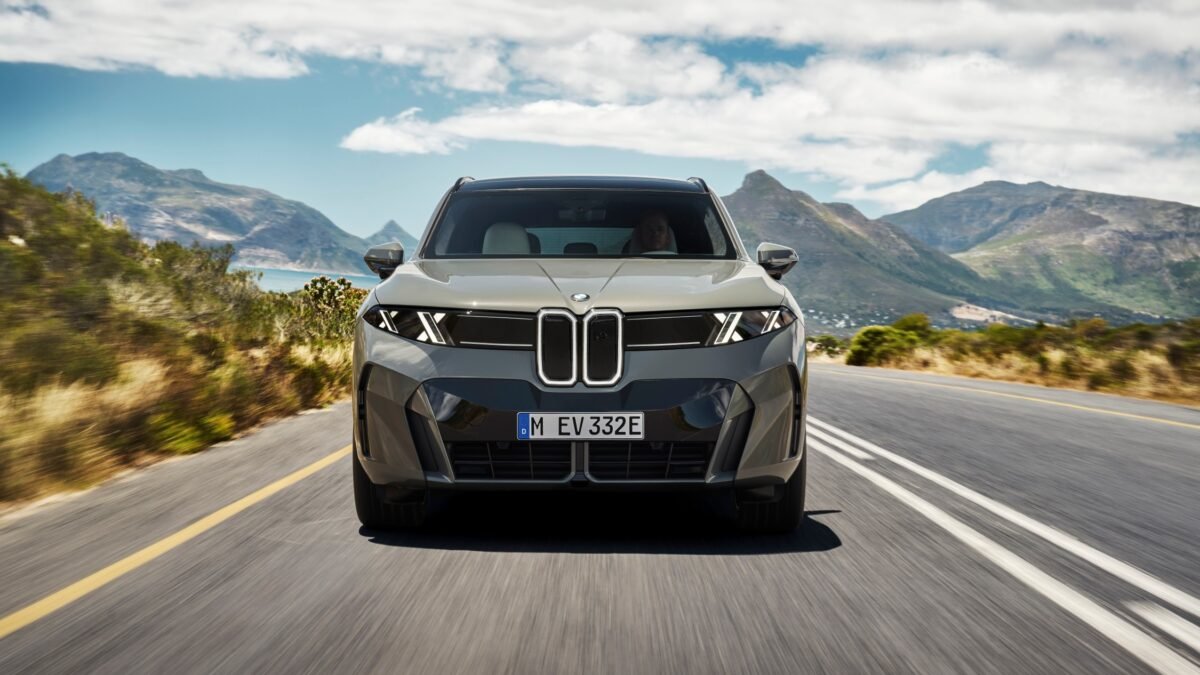
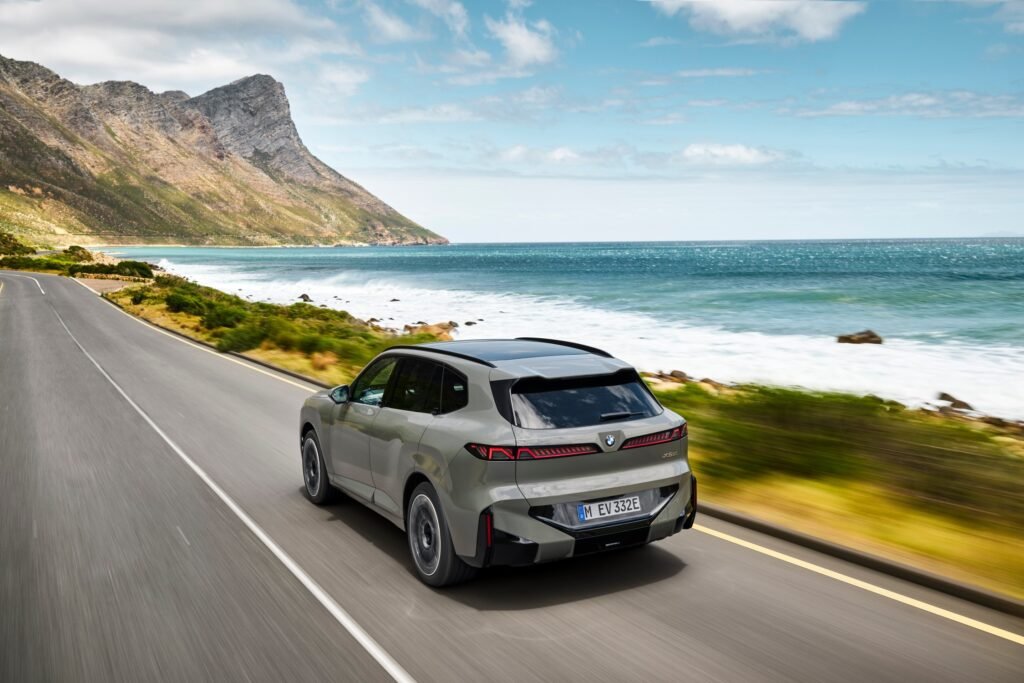
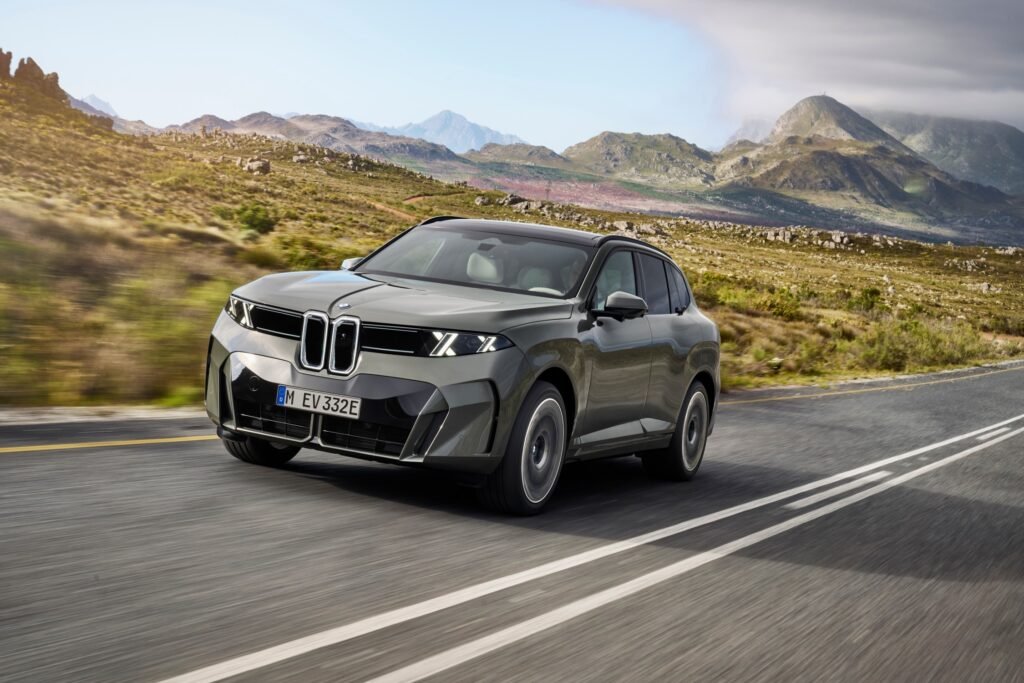
The new BMW X5 adopts BMW’s Neue Klasse design language without abandoning the proportions that made the model recognizable.
The front end is taller and more upright, with narrow vertically aligned kidney grilles surrounded by illumination. New double-X lighting elements combine daytime running lights, indicators and primary lighting functions into a single graphic.
Gasoline models use more visible front air intakes, while the electric iX5 receives a smoother lower section. The differences are noticeable, but BMW has avoided turning the electric model into an unrelated design exercise.
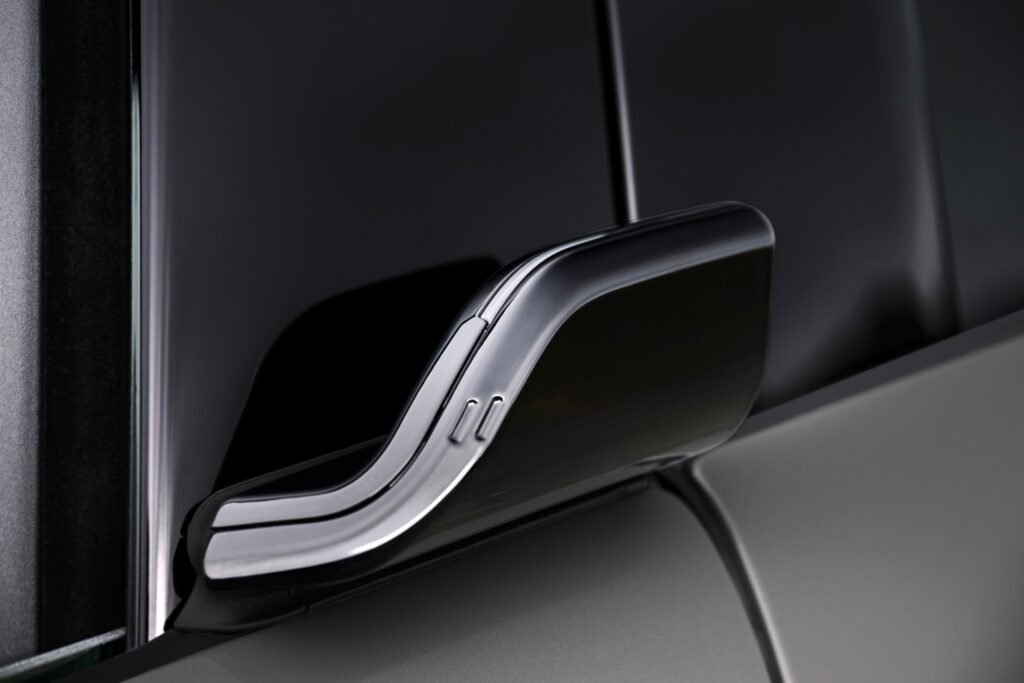
From the side, the surfaces are cleaner and the door handles are integrated into gloss-black elements around the pillars. Wheels start at 21 inches, with 22- and 23-inch designs available.
The result is more restrained than some recent BMW designs, although the illuminated grille and complex lighting will still divide opinion.
That may be unavoidable.
The X5 has to look modern enough to introduce a new technical generation while remaining familiar enough for existing owners to recognize it immediately.
The Biggest Interior Change Is Not Another Tablet
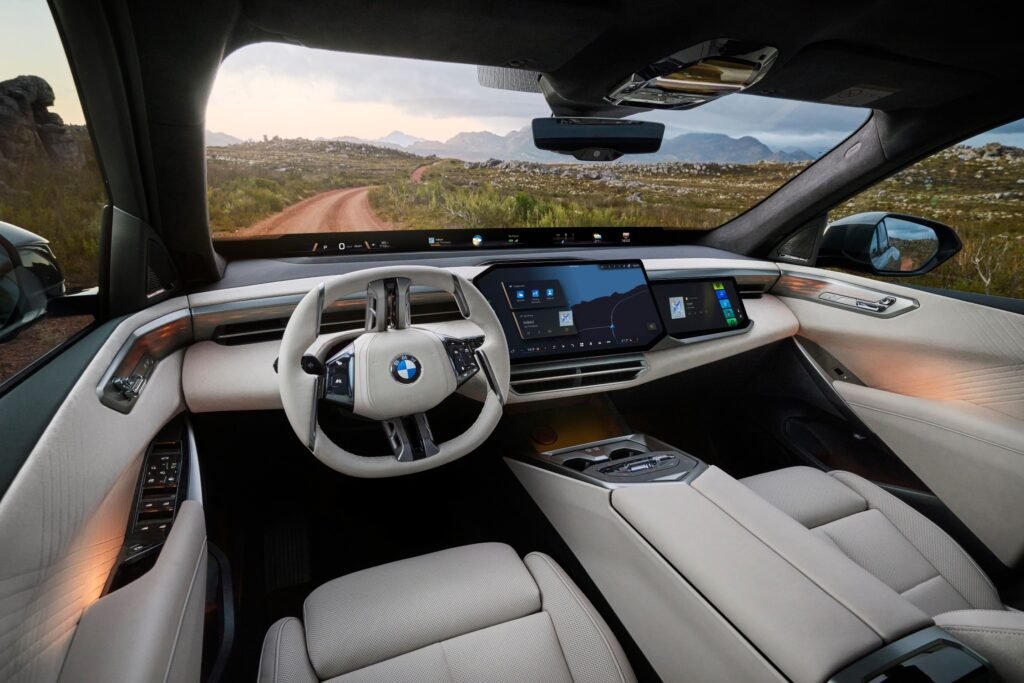
Inside, the 2027 BMW X5 receives Panoramic iDrive and Operating System X.
A thin display area stretches across the base of the windshield, placing key information closer to the driver’s natural line of sight. It works alongside an asymmetrical central touchscreen and a redesigned steering wheel with controls that illuminate when relevant functions are available.
An optional 14.6-inch passenger display allows the front passenger to stream video, use apps or join video calls. An interior camera monitors whether the driver is looking toward the passenger screen and can darken the display when it detects distraction.
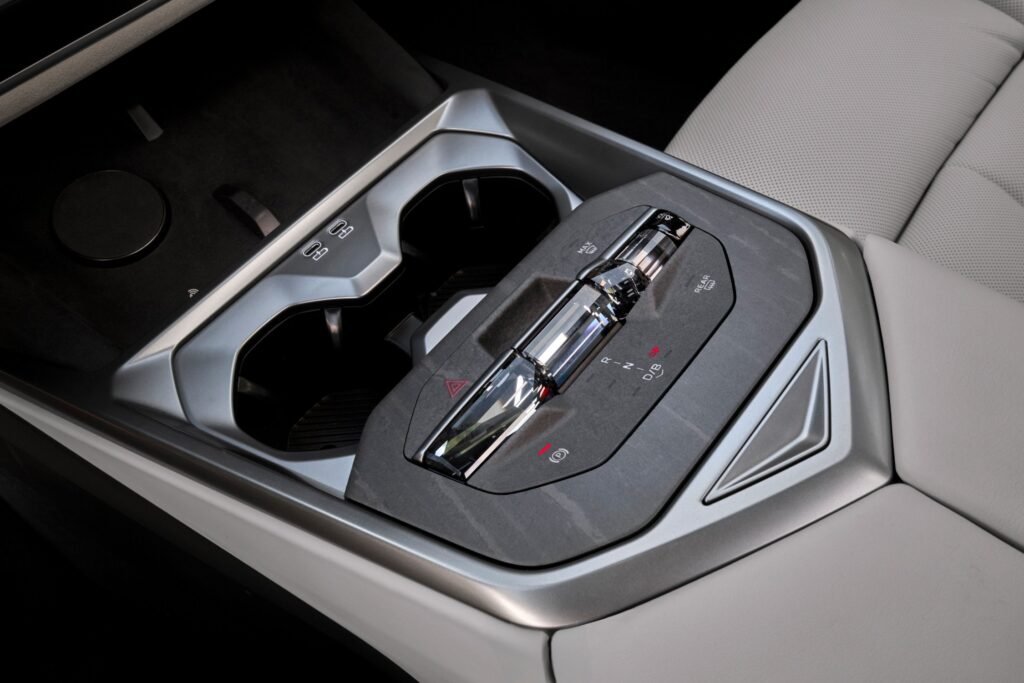
The cabin also introduces materials that are less typical of automotive interiors, including an optional thin layer of genuine slate on the center console. Glass controls, ambient lighting, a large panoramic roof and available Bowers & Wilkins audio reinforce the X5’s position as a luxury product.
There is still plenty of technology.
The difference is that BMW is trying to distribute information around the cabin rather than placing every function inside one oversized central rectangle.
Whether that makes the X5 genuinely easier to operate will only become clear after extended use.
Price Differences Are Smaller Than Expected
In the United States, the rear-wheel-drive 2027 BMW X5 40 will start at $69,800. The X5 40 xDrive begins at $72,100, while the plug-in hybrid X5 50e xDrive starts at $77,500.
The fully electric iX5 60 xDrive will begin at $79,800.
All prices exclude a $1,450 destination charge.
The relatively small gap between the plug-in hybrid and electric versions is deliberate.
BMW is not positioning the iX5 as an exotic alternative for a small group of early adopters. It sits inside the regular X5 range, priced closely enough that customers can compare powertrains rather than entirely different product categories.
Options will inevitably push transaction prices higher, particularly with larger wheels, upgraded interior materials, advanced suspension and technology packages.
Even so, the base structure sends a clear message: electric power is now one version of the X5, not a separate experiment.
When Will the 2027 BMW X5 Arrive?
The American rollout begins in October 2026 with the all-wheel-drive X5 40 xDrive.
The rear-wheel-drive X5 40, plug-in hybrid X5 50e xDrive and electric iX5 60 xDrive are scheduled to follow during the first quarter of 2027.
A V8-powered M Performance version is expected later in 2027. BMW has not yet provided a firm sales date for the hydrogen model.
Production will continue at BMW’s Spartanburg plant in South Carolina, which has built the X5 since the first generation. The iX5 will become the facility’s first fully electric production model.
BMW Is Hedging — but So Are Its Customers
Offering this many powertrains creates expense and complexity.
BMW must develop, certify, manufacture and support vehicles with very different energy systems. Dealers need training and equipment. Factories need flexibility. Marketing must explain the differences without making one version sound inferior to another.
A company would not accept that burden without a reason.
The reason is that the transition away from combustion is not happening at the same speed everywhere.
A customer with home charging and access to reliable high-speed stations may find the 435-mile iX5 difficult to resist. Someone covering long distances in areas with limited infrastructure may still prefer the gasoline model. Urban commuters who occasionally travel far may find the plug-in hybrid more practical than either.
BMW is not avoiding a decision because it lacks confidence.
It is acknowledging that customers are making different decisions.
The 2027 BMW X5 may eventually be remembered for its electric range, illuminated grille or unusual hydrogen derivative. Its most important feature, however, is choice.
In an industry obsessed with declaring which technology will win, BMW has built an SUV around the possibility that the answer will depend on who is driving.